June 2026 was dominated by the war in Iran and its repercussions on energy markets, inflation and monetary policy. Following a period of high tension linked to the risks surrounding the Strait of Hormuz, the price of Brent crude ultimately ended the quarter at around $73 per barrel, down sharply over the three-month period. The prospect of a fragile ceasefire between the United States and Iran, along with the partial resumption of shipping traffic through the Strait, helped to ease fears of a lasting supply shock.
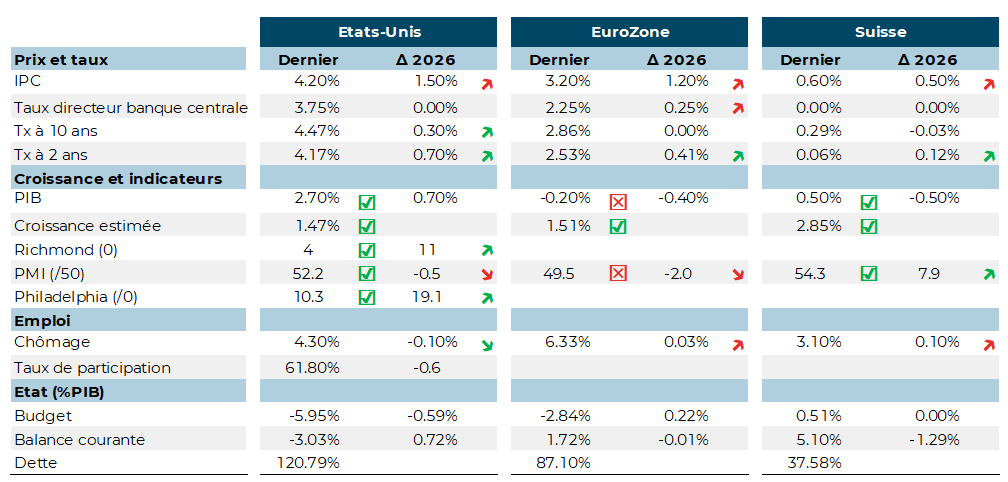
Despite this easing, inflation remains the main focus. In the United States, the PCE index rose to 4.1 per cent year-on-year in May, whilst the CPI reached 4.2 per cent, confirming a widespread acceleration in prices. In the eurozone, inflation rose to 3.2 per cent, exceeding the 3 per cent threshold for the first time since 2023, with a growing risk of second-round effects on wages.
This persistent inflation is not to the central banks’ liking, and June marked a clear shift towards a more restrictive stance globally. The Fed kept its rates on hold, but its tone hardened, hinting at the possibility of rises if inflation does not ease. The SNB also opted to keep rates unchanged. The ECB raised its rates by 25 basis points to 2.25 per cent, its first increase since 2023. The Bank of Japan, for its part, continued its normalisation process with a rise to 1 per cent, its highest level since 1995.
In terms of growth, trajectories are diverging. The US economy remains resilient, buoyed by a strong labour market and real GDP growth of 2.7 per cent year-on-year in the first quarter. In Europe, the recovery remains fragile. The geopolitical context is weighing on the outlook, and monetary tightening is adding a further reason for caution. In Switzerland, the economic environment remains relatively favourable. Nevertheless, the global context may gradually dampen growth momentum over the coming quarters.
For investors, two major risks will continue to dominate the market environment in the second half of the year. The first concerns developments in the Middle East. Despite the lull, tensions remain, and any further escalation could reignite fears over energy supplies. The second risk relates to central banks’ response to inflation that remains above target. If monetary authorities were to conclude that inflationary pressures are likely to become entrenched, they might be compelled to continue tightening monetary policy, at the risk of weighing on global economic growth. The combination of these geopolitical and monetary uncertainties is therefore likely to continue fuelling market volatility over the coming months.